
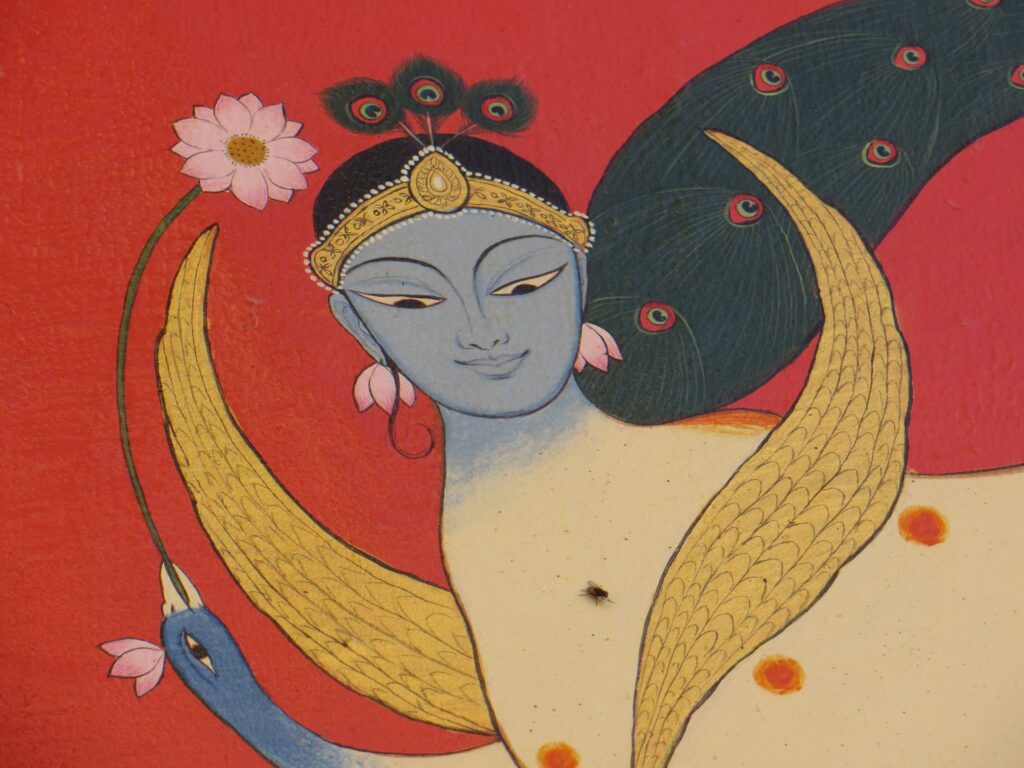

Gods on the Wall : Frescoes art of Nathdwara
Gods on the Wall or Frescoes art of Nathdwara is an exhibition featuring paintings created by young artists from Nathdwara, displayed on the walls surrounding the Shrinath Temple , representing a significant contribution to modern wall painting.
Nathdwara, located 50 kilometres from Udaipur in Rajasthan, is also known as the Triveni city of art. Many types of art flourished here, including wall painting. Even today, nearly two-hundred-year-old wall paintings can be seen on the walls of some of Nathdwara’s neglected ruins and ancient houses, but they are all neglected. In the second decade of this century, young painters created numerous wall paintings on the circumambulation walls of the Nathdwara temple, but due to lack of proper care, they fell into disrepair and are now on the verge of destruction.
So let’s move on and learn why this art developed in Nathdwara. What is its history?
Nathdwara is renowned for being the main seat of the Vallabha sect. There is a massive temple dedicated to Lord Shrinathji here. This temple is considered one of the richest in the country.
The town of Nathdwara was established around 1784, following the arrival of the idol of Shrinathji there. The town was named “Nathdwara” after Shrinathji.
The painters of Nathdwara have made their name famous worldwide.
The development of Nathdwara’s wall paintings dates back to the arrival of Shrinathji. The painters are “Adi Gaud Brahmins” who have been living in the temple’s circumambulation for years. Gradually, their residence came to be known as “Painters’ street”. Rarely anywhere in the world can so many painters live together in one place.
The Nathdwara style is distinctive, clearly influenced by Mughal and Rajput styles. The artists here are adept at depicting lifelike animals, birds, and human figures. The garden paintings are a sight to behold.
Many works of art by Nathdwara painters still adorn museums in Germany, Britain, and Japan.
So, we will soon be providing fascinating and fascinating information on this in a documentary. Stay tuned.